
I don’t consider myself much of a poet.
Out of all the poems I’ve written in my life, maybe ten of them are decent. Whereas I can generally sit down and force myself to get some prose down, I only ever attempt poetry when I have something I need to say immediately.
That said, I’m still grateful that I took a few poetry workshops in college. One of the most useful concepts I was introduced to, one that holds its merit across all forms of writing, is spheres of knowledge.
What are spheres of knowledge?
The concept can seem a little abstract and intimidating at first. I mean, spheres of knowledge? It’s an arcane, wizardy sounding phrase, isn’t it?
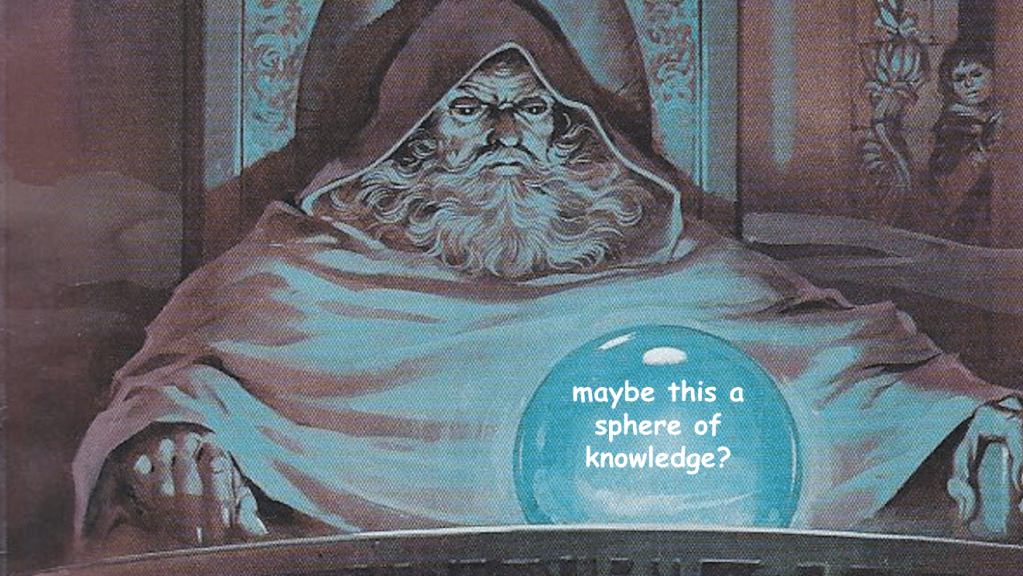
But it’s not as out there as it sounds. To put it simply, a sphere of knowledge is a collection of things that you know about a certain subject.
Algebraic equations? Those can make up one sphere. The physical sensations you experience standing on the seashore, being battered by the waves? That’s another sphere.
Knowledge isn’t only about what you’ve learned. Experience is knowledge, too.
Why is this useful in poetry? Because poetry operates on image systems, and when images are drawn from all over the place with no rhyme or reason, the reader notices.
Think of the Olivia Rodrigo song “Vampire.” The prechorus includes the lines “You sold me for parts / As you sank your teeth into me.”
Since when do vampires sell people for parts? Since when do people selling parts (mechanics, maybe?) sink their teeth into the parts they’re selling off? Sounds like a recipe for dental disaster.
These lines feel awkward because Olivia’s image system is incoherent, and the incoherency stems from the fact that she’s drawing from two very different spheres of knowledge.
It might seem like the way to avoid this problem is to only draw from one sphere of knowledge at a time. This has its perils as well.
In the poetry collection Debt to the Bone-Eating Snotflower by Sarah Lindsay, nearly half the poems draw from a very specific, ecologically influenced sphere of knowledge. In particular, Lindsay fixates on ocean life.
In particular-particular, there’s a lot of octopi. And I mean a LOT.
The image of an octopus squirting ink is brought up twice in different poems. This isn’t a problem in and of itself, but the image isn’t recontextualized. It’s the same phenomenon described in almost the exact same words, seemingly to communicate the exact same meaning.
I liked a fair number of Lindsay’s poems individually, but reading the collection as a whole served as a cautionary tale for what can happen when a poet’s sphere of knowledge is too narrow.
So, what’s a writer to do?
I can’t tell you how to strike that perfect balance between spheres of knowledge, that magical equilibrium where images from different realms are cleverly juxtaposed, giving rise to unexpected harmony.
But I can tell you that it’s in every writer’s best interest, poet or otherwise, to expand all your spheres of knowledge whenever possible.
This gives you a wider array of images to choose from. It keeps you from becoming overly reliant on repetition. It can inspire you, both on the page and off.
There are some writers (particularly young ones emerging from fandom spaces) that seem to pride themselves in only reading fiction, or fanfic, or particular genres. While there’s nothing wrong with having strong preferences, it’s disheartening to see people boasting about limiting their spheres of knowledge this way.
The best writers are eclectic readers. If you only read a particular genre, you risk stagnation. You might be able to replicate what you read, but your work will feel derivative.
The more you know, the greater your chances of crafting unique insight, of putting images in conversation with one another in a novel way.
This week, I read nonfiction works about primatology, cults, and ER physicians. Is anything that I learned directly relevant to my writing?
Maybe not, but maybe one day, one of these shards of knowledge will be part of a startling stained glass window, forcing readers to consider a collage of images they never could have anticipated.
***
I’m not going to lie to myself and pretend I’m getting anything done in the week between Christmas and New Years’. I’m taking this time to relax and be with my family, and I hope everyone else has the chance to do the same!

 THE SOLARIUM
Leave a comment